Showing posts with label Running. Show all posts

Thursday, April 30, 2015

Vitamin B12 and Post-Race Recovery

Vitamin B12 and Post-Race Recovery

Our Newsletter for May 2015!


Vitamin B12: Do you need an Energy Boost?

 By Dr. Kathy Van Zeyl

What is it?  Vitamin B12 is a water-soluble nutrient found in animal proteins and fortified grains.  It plays a crucial role in nerve function, red blood cell production, energy, metabolism, immunity and DNA synthesis. Similar to iron-deficiency, vitamin B12 deficiency is a form of “anemia” in which red blood cells are less capable of carrying oxygen to the cells.  People with B12 deficiencies often feel fatigued as a result and supplementing can help to increase energy.

How do I know if my B12 is low?  Signs of vitamin B12 deficiency typically happen when blood levels are below: 500 pmol/L and can include fatigue, weakness, numbness or tingling sensations in the hands and feet, loss of balance, lack of concentration, poor memory and depression.  
How do I increase my levels?  Beef liver and clams have the highest levels of Vitamin B12 but it can also be found in eggs, fish, poultry, and nutritional yeast.  For those with more severe deficiencies it’s best to use sublingual methylcobalamin in at least a 1000mcg/day dose.  Methylcobalamin is the most bioavailable (easy to absorb) form of vitamin B12 and the sublingual format allows it to be absorbed straight into the blood vessels under the tongue.  For those with issues in the stomach or small intestine, this can also affect B12 absorption making the sublingual format preferable.
What about injections?  A vitamin B12 injection is the quickest way to increase blood levels of B12. This is a safe procedure which involves a sterilized intramuscular needle filled with vitamin B12, typically inserted into the deltoid (shoulder) and delivers the vitamin straight into the muscle, which then diffuses directly into the blood. As vitamin B12 is water-soluble, your body will use whatever it needs and excrete the rest. B12 injections can be a quick way to boost energy, increase concentration, calm the nerves and ward off infections. After receiving a vitamin B12 injection, most people will notice an immediate increase in their energy, concentration, and mood within 24 hours to a week following the shot.

Wondering if vitamin B12 supplementation would be helpful for you? Ask our Naturopathic Doctor, Dr. Kathy Van Zeyl


Post-Race Recovery

Every finish line is also a start line, for recovery that is, and for your preparations for the next race. What you do in the minutes, hours, and days after completing any race will determine just how quickly you get your legs back and return to regular training. Doing the right things will make racing minimally disruptive to your overall training program, whereas doing the wrong things could spoil your next race by setting back your training or even by resulting in illness or injury. Two recommended post- race treatments are Massage Therapy and Chiropractic.

Massage Therapy: Sports massage has long been the go-to therapy for runners seeking relief from aches and pains.  A massage can improve flexibility, boost blood flow, and release tension, helping runners recover from or sidestep injury. Recovery is the other major benefit of massage. Massage can reduce pain and the intensity of muscle soreness after a grueling workout or race. Studies indicate that massage can reduce inflammation, improve immune function, and reduce stress hormones like cortisol. While massage won’t clear lactic acid or any other waste products from your muscles, it will promote more circulation to your muscles. Better circulation is what will aid your recovery. 

Chiropractic: When you are training for any type of race, recovery is a crucial component. The faster your body is able to recover, the sooner you will be able to get back out there and push your body to the limit.  Chiropractic is a key component in the recovery process of your body between workouts and races. If your body is structurally out of alignment, it can be very detrimental, not only slowing down the recovery process, but also creating excessive damage during a typical training session or race. Proper alignment of the body alone will give proper balance through the body. Proper balance allows all of the muscles and joints to function the way they were designed to, which directly decreases the stress that is placed on these structures. This will decrease injuries directly. When a body is in its intended alignment, there is much less occurrence of injury because everything is functioning the way that it is intended. You cannot run at your best level if your body’s mechanics are compromised. Dr. Barbara Rodwin can treat and prevent misalignments in the feet, knees, hips, lower back, neck, shoulders, elbows and wrists aiding in restoring motion.

When is the best time to seek out Massage Therapy and/or Chiropractic? Your timing of Massage Therapy as a post- race treatment depends on the length and intensity of your race, whereas a chiropractic appointment is recommended soon after a race. 

Questions? Ask one of our Registered Massage Therapists or Dr. Barbara Rodwin


When to Run Again

How quickly you return to normal training depends on the length of the race you've just completed, your fitness level, and when you plan to race next. Here are guidelines to consider when planning your return to training: 
After shorter races (up to 10K): You can do your next hard run within as few as three days, if you’re a high-mileage runner. Otherwise, wait about five days. 
After a 10K or half-marathon: Fitter runners can go long or fast again after four or five days. More casual runners should wait at least a full week. 
After a marathon: All runners wishing to maintain a high level of fitness should do little or no running for four to seven days, followed by a week of only low-intensity running. Then you can return to your normal regimen.
Cross-training is a great way to maintain fitness without slowing the recovery process in the first few days after a longer race.  Walking, swimming, cycling, and inline skating are all good choices, as long as you keep the intensity low.

Promotions for May:

Bring in your bib from the Ottawa Race Weekend and receive 25% off Chiropractic and/or Registered Massage Therapy for one visit

Vitamin B12 “Power Hour”: Drop in on Wednesdays between 12-1pm during the month of May: Dr. Kathy VanZeyl, ND, will be offering Vitamin B12 injections for both new and existing patients at $15 each!


Thursday, July 3, 2014

Common Injuries Caused by Running

alexloves.com


Plantar Fasciitis  
laserstim.net
The plantar fascia (fash-ah) is a thick band of tissue that connects your heel to the base of your toes. When it is torn, inflamed or over-stretched, this is called plantar fasciitis (fash-e-it-is). This condition can be a result of:
• An acute injury (strain) that places an excessive load on the foot
• Prolonged or excessive pronation (flat foot) of the foot
• A high arch
• A change in footwear
You will often feel the pain at the base of your heel when you step out of bed in the morning. This injury can be very pesky; it can prevent you from running for weeks, sometimes months.

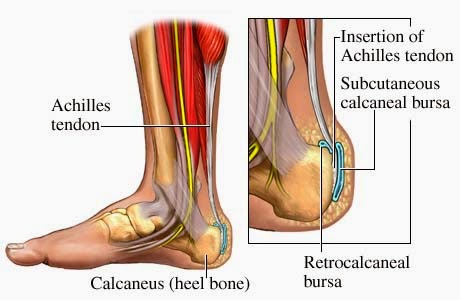
Achilles tendonitis
footdoc.org
The Achilles tendon stems from the muscles in your calf and attaches to your calcaneus bone, or the heel of your foot. Achilles tendonitis is characterized by pain when the foot is plantar flexed, such as when you’re walking on your toes, and is a condition that develops as a result of repeated microtrauma. scarring, or the presence of adhesions in the tendon. It contributes to discomfort while running or playing other sports. Rest and ice are important in healing this injury, as well as professional assessment and treatment.

Self-management techniques:
• Buy quarter-inch heel lifts or Dr. Scholl’s gel heel cushions for your shoes. They are available at our clinic.
• Wear a heated ankle wrap throughout the day to improve circulation.
• Massage your Achilles tendon with ice to prevent poor-quality blood vessels from forming.
• Do the push-against-the-wall stretch regularly, with your rear knee straight, then slightly bent.

Shin splints
richwoodstrack.com
More of a catch-all term than an actual medical condition, “shin splints” refer to any tightening of the muscles, tendons, and even the covering of the bones in your shins. They are especially common among beginning runners, those using old running shoes, those with a rigid or high-arched foot, those who land on the foot incorrectly, and those who dramatically increase their mileage. Please have them checked as they can lead to stress fractures. Do not run if you have shin pain!

Some self-massage tips: Sit in a chair. Place one thumb in the groove between your shin bone and shin muscle (the one on the outside) of the leg that hurts. Place your other thumb on top for support. Rub down the leg. Then move your thumb about an inch to the outside and rub down your leg again. Move an inch to the outside again, and so on. Do this as often as possible, lightly at first and more deeply as the injury begins to heal.

Runner’s knee
prolotherapy.org
You know you have runner’s knee (also called Patello-femoral or chondromalacia patellae) when you feel pain beneath your kneecap while running. It is caused by the kneecap not tracking properly and rubbing against the femur (thigh bone), and can be aggravated by walking down stairs or sitting with the knee bent for a long period of time. One reason for this misalignment is poor biomechanics of the foot, ankle, hip, and knee that leads to excessive wear and tear on the patella. A compression injury may also lead to pain and discomfort in this area.

Iliotibial Band Syndrome
Iliotibial Band Syndrome (IBS) is one of the leading causes of lateral (outside) knee pain in runners. The iliotibial band is a superficial thickening of tissue on the outside of the thigh, extending from the outside of the pelvis, over the hip and knee, and inserting just below the knee. The band is crucial to stabilizing the knee during running, moving from behind the femur (the thigh) to the front of it during the gait cycle. The continual rubbing of the band over the bone, combined with the repeated flexion and extension of the knee during running, may cause the area to become inflamed or the band itself may become irritated.

Symptoms - The symptoms range from a stinging sensation just above the knee joint on the outside of the knee, hip, or along the entire length of the iliotibial band, to swelling of the tissue at the point where the band moves over the femur. The pain may not occur immediately, but will worsen during activity when the foot strikes the ground if you over-stride or run downhill, and may persist afterward.

Causes of Injury – Iliotibial Band Syndrome is the result of both poor training habits, rotation of the hips and anatomical abnormalities:
1. Running on a banked surface, such as the shoulder of a road or an indoor track.
2. Inadequate warm up or cool down.
3. Running excessive distances or increasing mileage too quickly.
4. Anatomical abnormalities, such as genu varum (bow legs), leg length discrepancy, or postural imbalances.


Hamstring pain
Your hamstring muscles are actually a combination of three separate muscles located on the back of your leg, running from your lower pelvis to your knee. They help mainly to flex the knee and extend the hip. If you suffer from hamstring pain, you may have a degenerative disc disease or an abnormal pelvic tilt, problems stemming from your back.

Hip, neck and back pain
Running produces an added amount of pressure to the spine and the intervertebral discs that supply cushioning and lubrication to these joints. If your spine is in any amount of misalignment, certain risks apply not only to the spine itself, but also to the surrounding muscles and tissues.
As you run, you could be providing the motion that initiates or further aggravates your discomfort. Proper running posture is key in reducing these factors and allowing your body to work most efficiently, and at its optimal performance. If any one of these areas becomes misaligned, chances are that if left unchecked, it could precipitate problems in other areas.